
 Алгебра
 Английский
 Биология
 География
 Геометрия
 История
 Русский
 Обществознание
 Физика
 Химия
Химия Информатика
 Литература
 Математика
Вопрос:
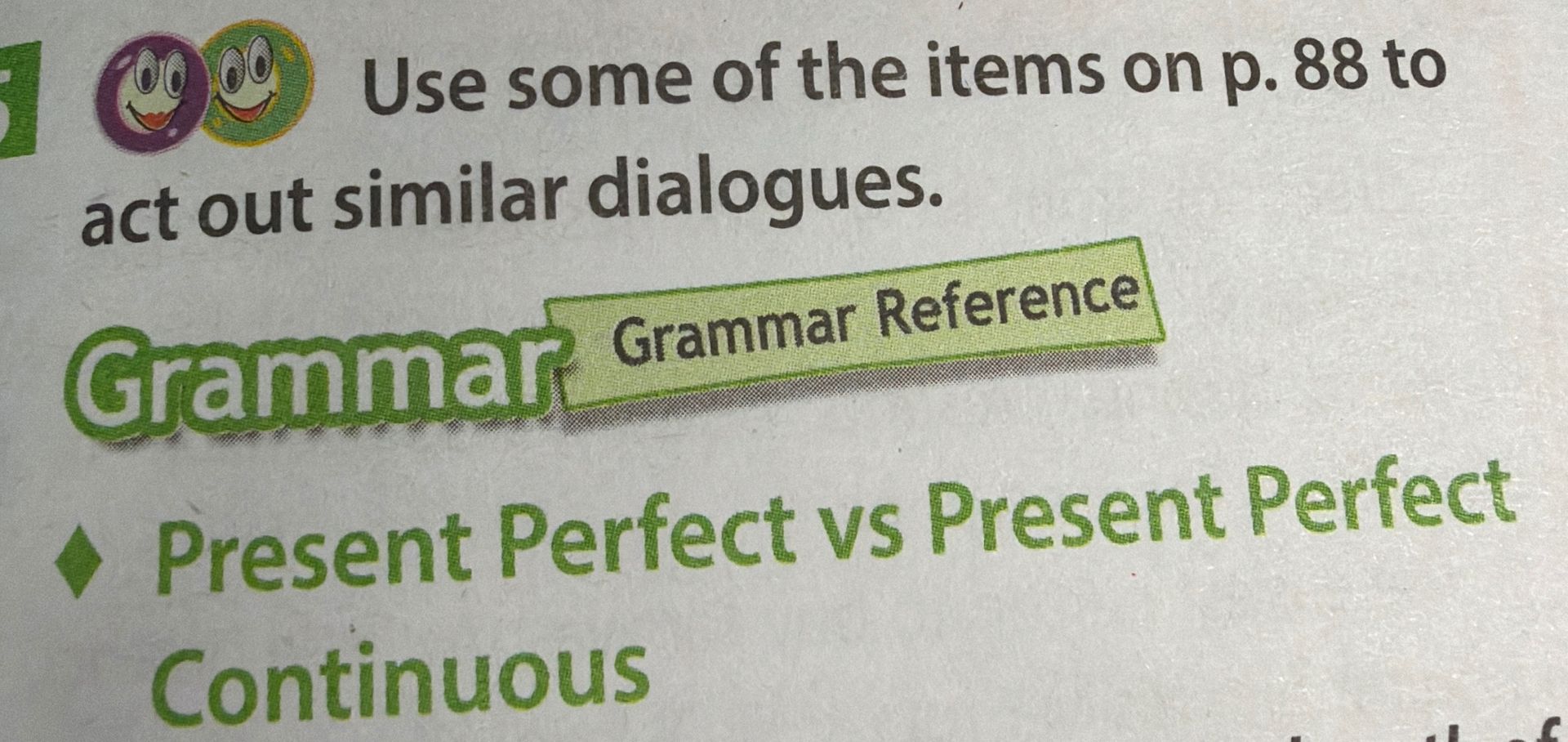
Use some of the items on p. 88 to act out similar dialogues. Grammar Grammar Reference Present Perfect vs Present Perfect Continuous
Ответ:
Grammar Reference
This section focuses on the difference between the Present Perfect and Present Perfect Continuous tenses.
Present Perfect Tense
Used to talk about actions that started in the past and continue to the present, or actions that happened at an unspecified time in the past, but have a result in the present.
- Structure: Subject + have/has + past participle
- Example: She has lived in this city for ten years. (She still lives here)
- Example: I have seen this movie before. (The time is not important, but the experience is)
Present Perfect Continuous Tense
Used to talk about actions that started in the past and are still continuing, often emphasizing the duration of the action.
- Structure: Subject + have/has + been + verb-ing
- Example: She has been living in this city for ten years. (Emphasizes the duration of living here)
- Example: It has been raining all day. (The rain started in the past and continues)
Key Differences:
- The Present Perfect emphasizes the completion of an action or its result.
- The Present Perfect Continuous emphasizes the duration and continuity of an action.
To act out similar dialogues: Consider situations where one tense is more appropriate than the other, focusing on whether the action is completed or ongoing.
