
 Алгебра
 Английский
 Биология
 География
 Геометрия
 История
 Русский
 Обществознание
 Физика
 Химия
Химия Информатика
 Литература
 Математика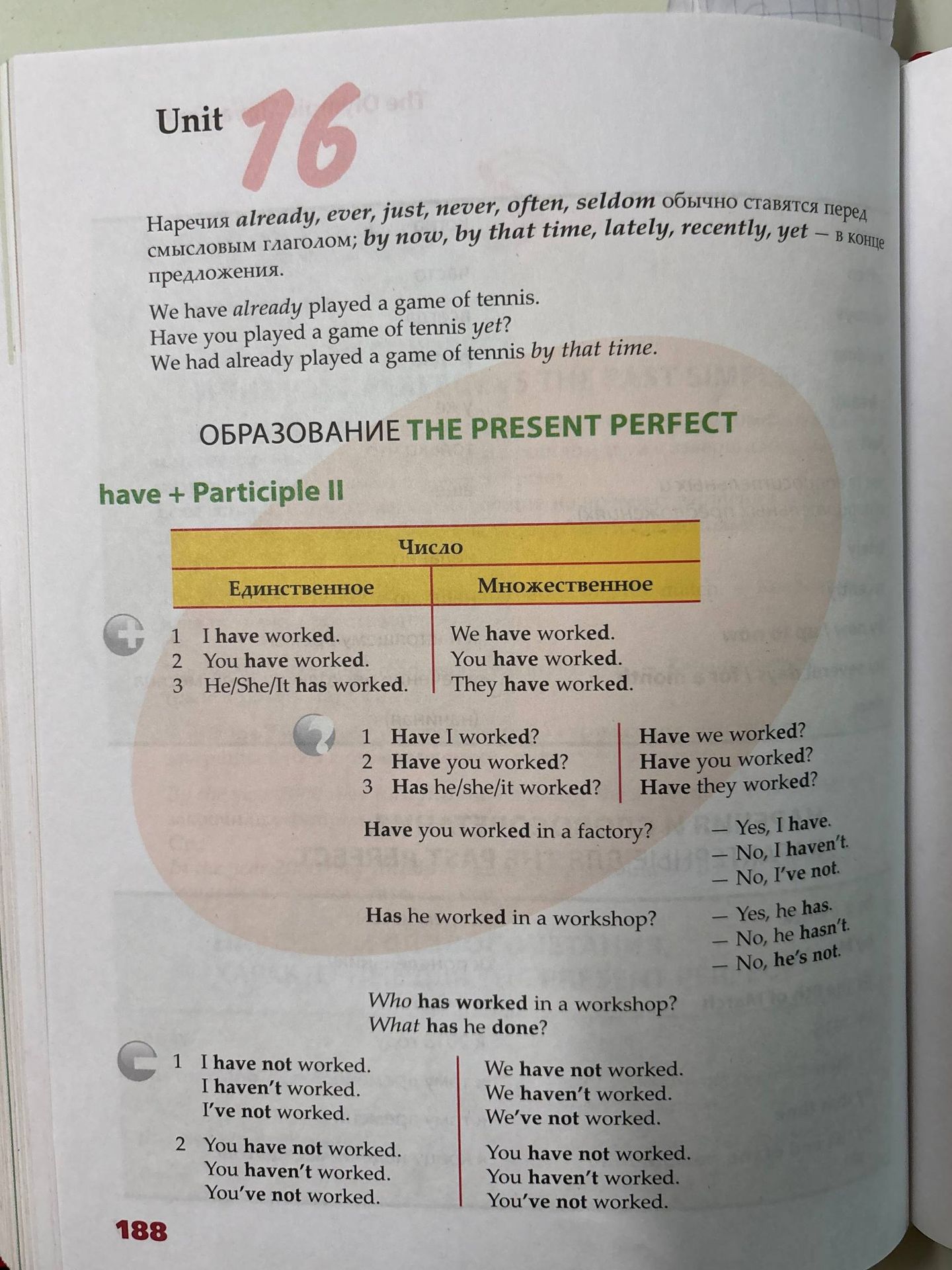
Ответ:
Unit 16: The Present Perfect Tense
Adverbs like already, ever, just, never, often, seldom are usually placed before the main verb. Adverbs like by now, by that time, lately, recently, yet are usually placed at the end of the sentence.
Examples:
- We have already played a game of tennis.
- Have you played a game of tennis yet?
- We had already played a game of tennis by that time.
Formation of the Present Perfect:
have + Participle II
| Number | Singular | Plural |
|---|---|---|
| 1 | I have worked. | We have worked. |
| 2 | You have worked. | You have worked. |
| 3 | He/She/It has worked. | They have worked. |
Interrogative Forms:
| Singular | Plural |
|---|---|
| Have I worked? | Have we worked? |
| Have you worked? | Have you worked? |
| Has he/she/it worked? | Have they worked? |
Example Question: Have you worked in a factory?
Short Answers:
- Yes, I have.
- No, I haven't.
- No, I've not.
Example Question: Has he worked in a workshop?
Short Answers:
- Yes, he has.
- No, he hasn't.
- No, he's not.
Questions and Negative Forms:
Question: Who has worked in a workshop?
Question: What has he done?
| Singular | Plural |
|---|---|
| I have not worked. I haven't worked. I've not worked. |
We have not worked. We haven't worked. We've not worked. |
| You have not worked. You haven't worked. You've not worked. |
You have not worked. You haven't worked. You've not worked. |
| He/She/It has not worked. He/She/It hasn't worked. He/She/It's not worked. |
They have not worked. They haven't worked. They've not worked. |
Page Number: 188
