
 Алгебра
 Английский
 Биология
 География
 Геометрия
 История
 Русский
 Обществознание
 Физика
 Химия
Химия Информатика
 Литература
 Математика
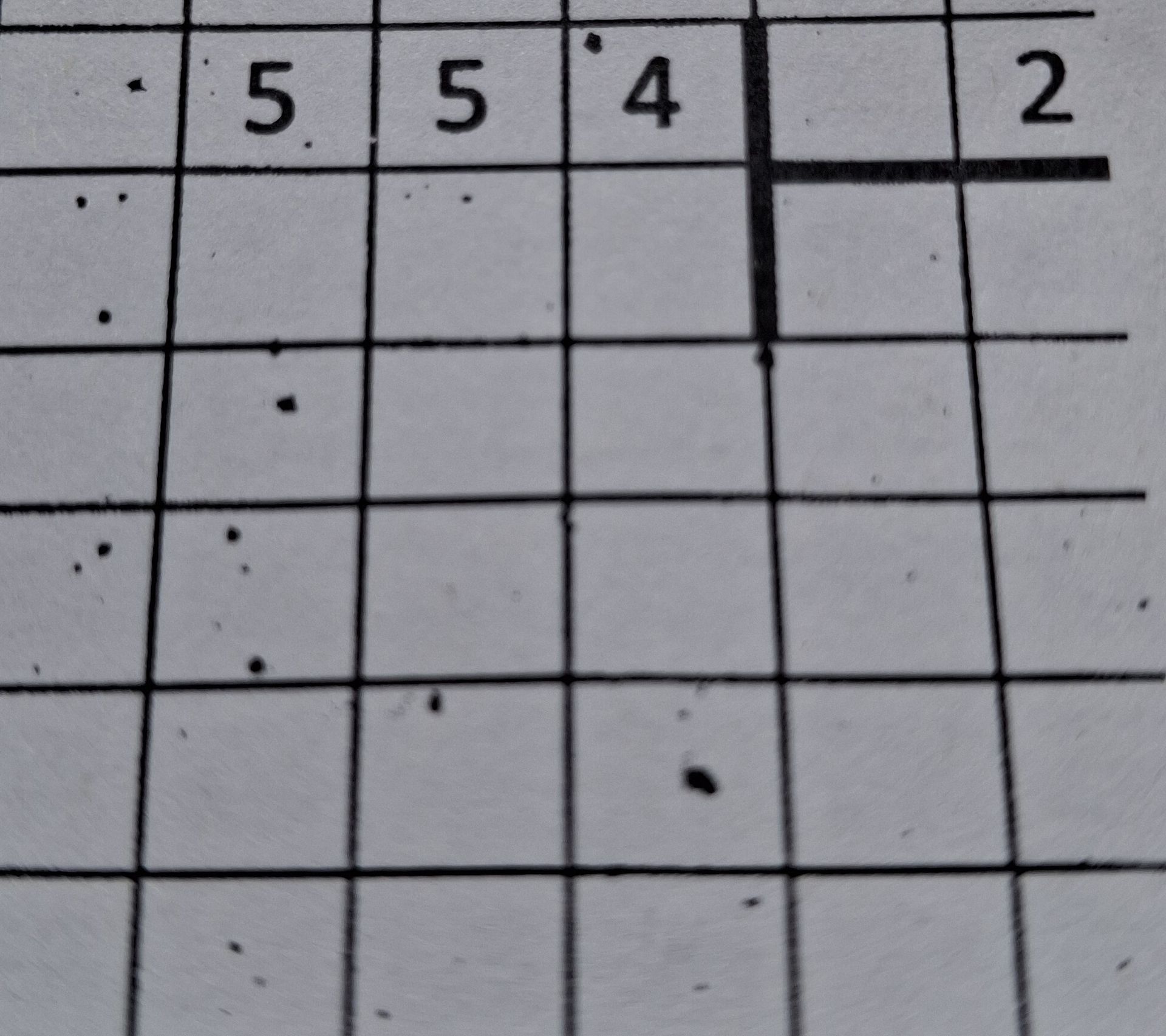
Fill in the grid with the given numbers.
Ответ:
The image shows a grid with some numbers already filled in. The task is to complete the grid based on the provided numbers and the implicit rules of the puzzle (likely a Sudoku or similar number-placement puzzle, although the rules are not explicitly stated). The numbers visible are 5, 5, 4, and 2. The grid is also partially filled with dots, which may represent already filled cells or cells to be filled.
Without explicit rules for the puzzle (e.g., Sudoku, KenKen, Kakuro, etc.), it is impossible to definitively fill the grid. However, based on the visual context of a grid with numbers, it's a common type of logic puzzle. The horizontal line segment under the '4' and '2' suggests a potential mathematical operation or grouping, common in puzzles like KenKen.
If this were a KenKen puzzle, the '4' might represent the sum of two cells, and the '2' might represent the difference or product of two cells. However, this is speculative.
To provide a concrete answer, I would need the rules of the puzzle or more context.
Answer: Unable to complete without puzzle rules. The visible numbers are 5, 5, 4, and 2.
