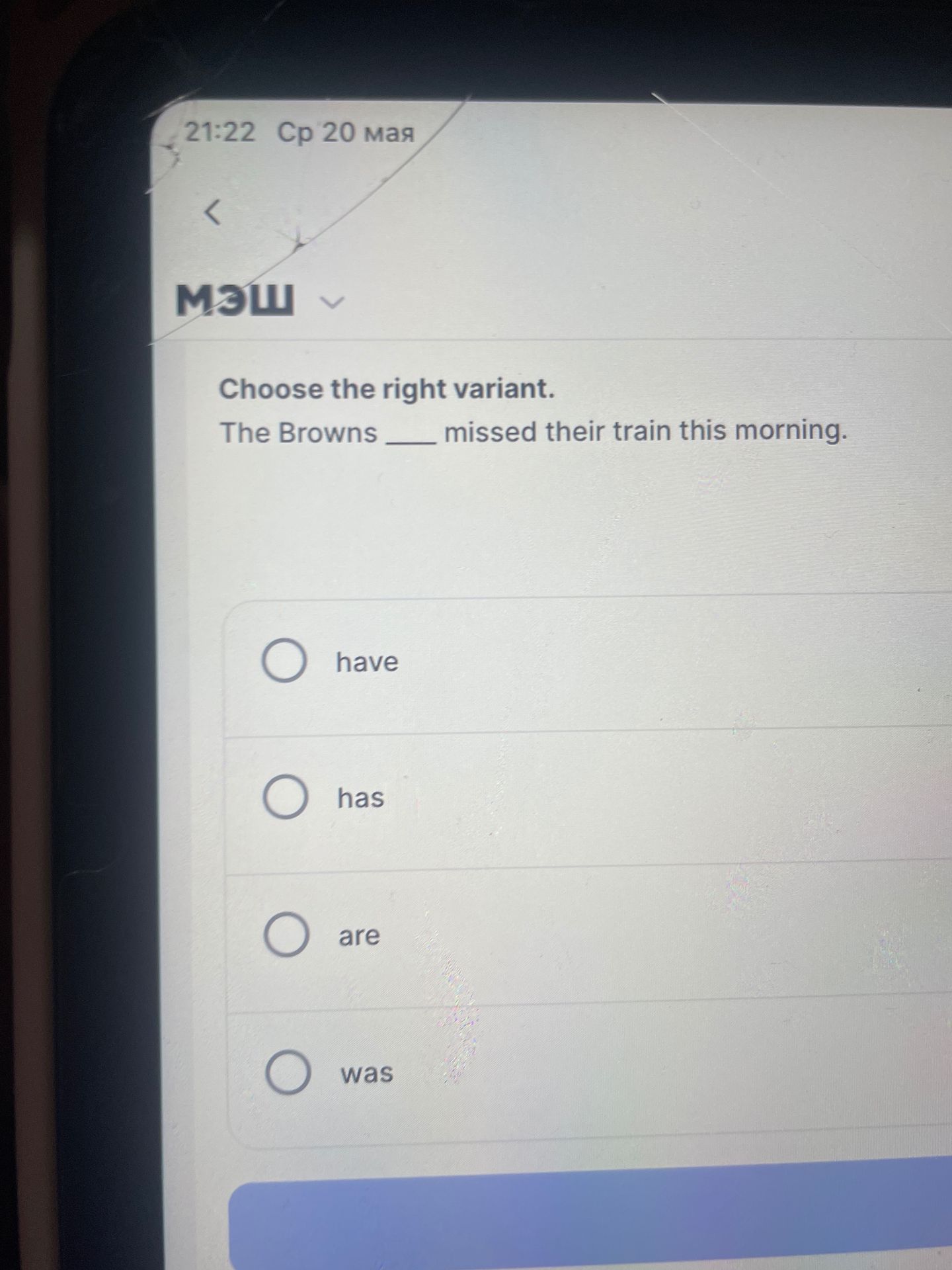
The sentence uses the past perfect tense, which requires 'had' before the past participle 'missed'. Since 'The Browns' is a plural subject, 'have' is the correct auxiliary verb to form the present perfect tense, but the context implies a past event. 'Has' is for singular subjects. 'Are' and 'was' are forms of 'to be' and do not fit the structure for forming the perfect tenses. Therefore, the correct auxiliary verb to complete the past perfect tense is 'had'. However, 'had' is not an option. Among the given options, 'have' is the most appropriate choice if the intended tense was present perfect, but the sentence structure with 'missed' strongly suggests past perfect. Given the options, and assuming a potential error in the question or options, if we must choose from the provided options, and considering 'The Browns' as a plural subject, 'have' would be used for present perfect. However, the sentence implies a completed action in the past, making 'had missed' the grammatically correct form for past perfect. Since 'had' is not an option, and 'missed' is a past participle, we need an auxiliary verb. 'Have' is the plural form of the present perfect auxiliary. If the sentence were 'The Browns have missed their train this morning', it would be grammatically correct for present perfect. Without 'had' as an option, and given the options, 'have' is the most plausible choice if the question intends a perfect tense and 'missed' is the past participle. However, the most grammatically sound completion for a past event is 'had missed'. Since 'had' is not an option, and 'have' is the plural present perfect auxiliary, it is the closest fit among the choices if the sentence is interpreted as present perfect. If the sentence is interpreted as past perfect, none of the options are correct. Assuming the question intends a perfect tense and 'missed' is the past participle, and considering the plural subject 'The Browns', 'have' is the correct auxiliary for present perfect. If the question intended past perfect, 'had' would be correct. Given the options, and the plural subject, 'have' is the most likely intended answer for a perfect tense, despite the ambiguity with 'this morning' which can sometimes imply past perfect. The correct answer is 'have'.