
 Алгебра
 Английский
 Биология
 География
 Геометрия
 История
 Русский
 Обществознание
 Физика
 Химия
Химия Информатика
 Литература
 Математика
Вопрос:
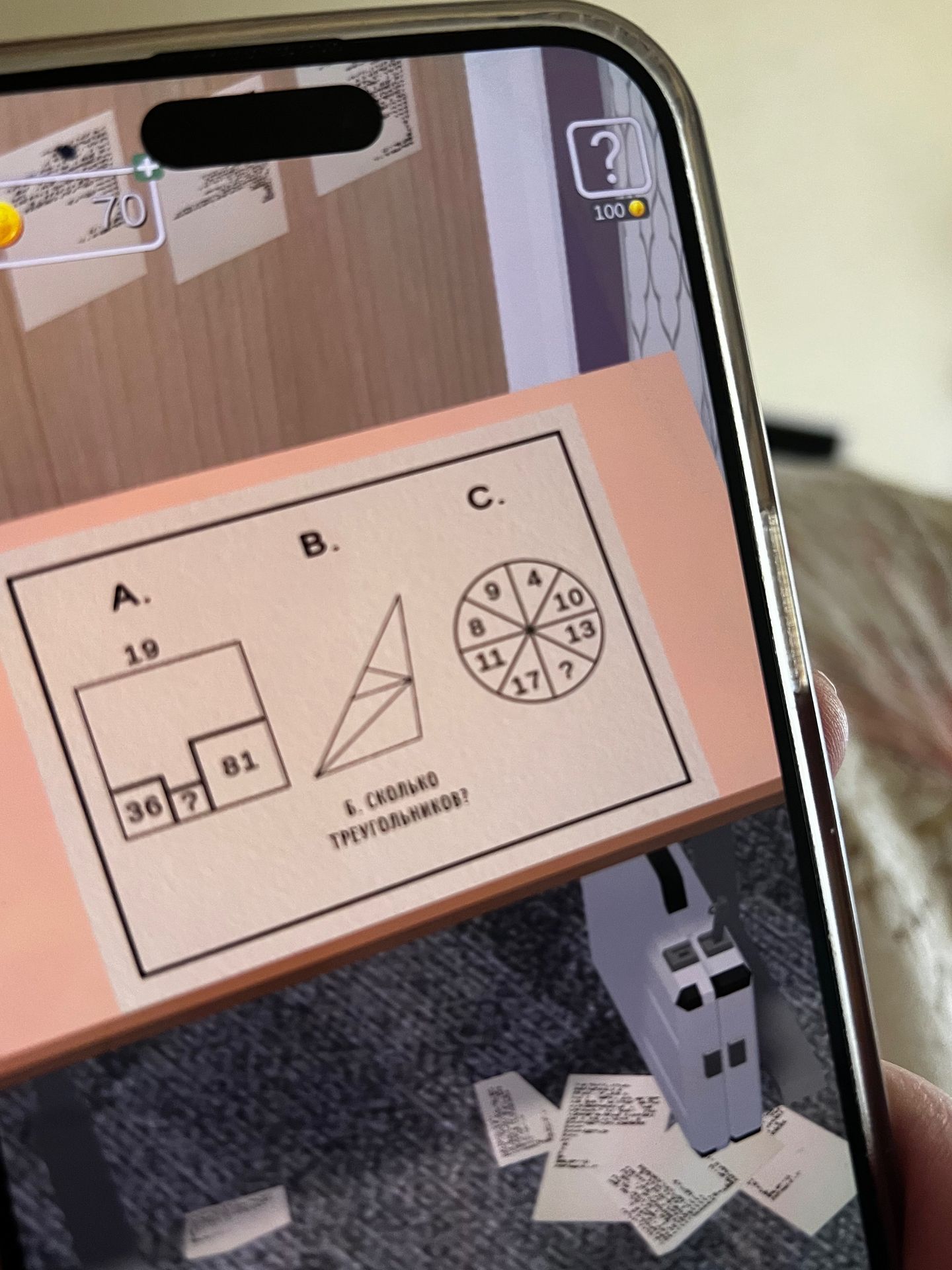
C. Find the missing number in the circle.
Ответ:
INSIGHT
Краткое пояснение: The pattern in the circle involves adding the number of segments in the previous slice to the starting number of the current slice.
Пошаговое решение:
- Observe the numbers in the circle: 4, 10, 13, ?, 17, 11, 8, 9.
- Let's look for a pattern between adjacent numbers.
- From 4 to 10, the difference is +6.
- From 10 to 13, the difference is +3.
- From 13 to ?, let's assume a pattern in the differences. The differences are 6, 3. This doesn't seem immediately obvious.
- Let's try another approach. Consider the sum of numbers.
- Let's consider the pattern by skipping numbers.
- Starting from 4, going clockwise: 4, 10, 13, ?, 17, 11, 8, 9.
- Let's examine the relationship between consecutive numbers in a different way.
- Consider the number of lines or segments. The number of segments in each slice are not explicit.
- Let's look for a pattern in the differences:
- 4 to 10: +6
- 10 to 13: +3
- 13 to ?: Let's assume the differences themselves follow a pattern. Perhaps decreasing by 3? Then 13 + (3-3) = 13. But that doesn't make sense.
- Let's try adding consecutive numbers in the sequence.
- Let's consider the starting number of each segment and the increment to the next.
- Look at the numbers as they increase and decrease.
- Let's assume a pattern where we add a number and then subtract a number, or add numbers that increase/decrease in a certain way.
- Let's consider pairs of numbers.
- If we look at the numbers: 4, 10, 13, ?, 17, 11, 8, 9.
- Let's try to find a relationship between numbers that are opposite each other or separated by a fixed number of segments.
- 4 and 17: difference is 13.
- 10 and 11: difference is 1.
- 13 and 8: difference is 5.
- ? and 9: difference is ? - 9.
- This opposite number relationship does not seem consistent.
- Let's revisit the consecutive differences: +6, +3.
- What if the pattern is related to prime numbers or other number sequences?
- Let's try to find a pattern in the jumps.
- 4 --> 10 (+6)
- 10 --> 13 (+3)
- 13 --> ?
- ? --> 17
- 17 --> 11 (-6)
- 11 --> 8 (-3)
- 8 --> 9 (+1)
- The differences are +6, +3, ?, ?, -6, -3, +1. This sequence of differences is not immediately obvious.
- Let's look at the sequence from 8 to 4: 8 -> 9 (+1), 9 -> 4 (-5). This is not helpful.
- Let's assume the pattern is consistent around the circle.
- Consider the differences: 6, 3, x, y, -6, -3, 1.
- If we look at the sequence: 4, 10, 13, ?, 17, 11, 8, 9.
- Let's try to find a pattern that uses the numbers themselves.
- What if we add the numbers in a specific order?
- Let's reconsider the differences: +6, +3. This suggests a possible halving or decreasing pattern. If the next difference is +0, then ?=13. Then +13, then -6, -3, +1. This doesn't fit.
- Let's assume the pattern of differences is: +6, +3, +0, -3, -6, -3, +1. If the difference after 13 is +0, then ?=13. Then the next difference is -3, so 13-3=10. But the next number is 17.
- Let's look at the sequence again: 4, 10, 13, ?, 17, 11, 8, 9.
- Consider the possibility of adding the digits of the previous number, or some operation with the numbers.
- Let's try to find a pattern related to the shape of the slices. There are 8 slices.
- What if the pattern is: number + increment = next number, and the increment changes?
- Let's assume the increment sequence is symmetric or follows a pattern.
- Look at the numbers from 17: 17 -> 11 (-6), 11 -> 8 (-3). This is the reverse of the first two differences.
- This suggests a pattern where the increments are symmetrical.
- So, if the differences are +6, +3, then the next difference should lead to 17.
- Let the differences be d1, d2, d3, d4, d5, d6, d7, d8.
- d1 = 10-4 = 6
- d2 = 13-10 = 3
- d7 = 11-17 = -6
- d6 = 8-11 = -3
- This suggests a symmetry in the differences: d1 = -d5, d2 = -d6.
- So, we have +6, +3, d3, d4, d5, -3, -6, d8.
- This does not seem to fit because d5 should be -d1 = -6, but we have 11-17 = -6. This implies d5 = -6. So, 17 + (-6) = 11. Correct.
- And d6 = -d2 = -3. So, 11 + (-3) = 8. Correct.
- So the pattern of differences is +6, +3, d3, d4, -6, -3, d7, d8.
- Wait, the differences are between consecutive numbers.
- 4 (+6) 10 (+3) 13 (?+d3) ? (?+d4) 17 (?+d5) 11 (?+d6) 8 (?+d7) 9 (?+d8) 4.
- Let's re-evaluate the sequence of differences:
- 10 - 4 = 6
- 13 - 10 = 3
- ? - 13 = d3
- 17 - ? = d4
- 11 - 17 = -6
- 8 - 11 = -3
- 9 - 8 = 1
- 4 - 9 = -5 (This is not a consecutive difference, it's closing the circle)
- The differences are: 6, 3, d3, d4, -6, -3, 1.
- It looks like the absolute values of differences are decreasing and then increasing, and there's a sign change.
- Let's consider the pattern of differences: +6, +3, ...
- If we assume symmetry around the circle, then the difference from 17 to 11 is -6, and from 11 to 8 is -3. This matches the start of the sequence but in reverse and with opposite signs.
- This implies that the pattern of differences is: +6, +3, d3, d4, -6, -3, -d3, -d4.
- However, the last difference is 8 to 9 (+1). This breaks the symmetry.
- Let's rethink. Consider pairs of numbers: (4, 10), (10, 13), (13, ?), (?, 17), (17, 11), (11, 8), (8, 9), (9, 4).
- Let's look at the numbers in relation to each other in segments.
- Segment 1: 4
- Segment 2: 10
- Segment 3: 13
- Segment 4: ?
- Segment 5: 17
- Segment 6: 11
- Segment 7: 8
- Segment 8: 9
- Let's try to find a pattern by adding or subtracting specific values.
- Consider the possibility of adding the segment number, or its square, or some other relation.
- Let's go back to the differences: 6, 3. The next difference is likely to be smaller than 3, or related.
- What if the pattern is related to adding something and then subtracting something?
- Let's look at the numbers 4, 10, 13. The sum is 27.
- What about 17, 11, 8, 9? The sum is 45.
- Let's assume a pattern where you add a value, then add another value, and so on.
- Consider the pattern: Add 6, then add 3. What if the next step is to add 0? Then 13+0 = 13. But the next number is 17.
- What if the pattern is related to the previous numbers in the sequence, not just consecutive ones?
- Let's look at the numbers 4, 10, 13, ?, 17, 11, 8, 9.
- Try to find a pattern that fits.
- Consider the relationship between 4 and 10, and 8 and 9.
- Let's test a hypothesis: The sum of opposite numbers is constant.
- 4 + 17 = 21
- 10 + 11 = 21
- 13 + 8 = 21
- ? + 9 = 21
- If this is the pattern, then ? = 21 - 9 = 12.
- Let's check if this is consistent.
- The numbers are arranged in a circle. Let's number the positions 1 to 8 clockwise.
- Position 1: 4
- Position 2: 10
- Position 3: 13
- Position 4: ?
- Position 5: 17
- Position 6: 11
- Position 7: 8
- Position 8: 9
- Opposite pairs are (1, 5), (2, 6), (3, 7), (4, 8).
- 1+5: 4 + 17 = 21
- 2+6: 10 + 11 = 21
- 3+7: 13 + 8 = 21
- 4+8: ? + 9 = 21
- This implies that ? = 21 - 9 = 12.
- The missing number is 12.
Похожие
