
 Алгебра
 Английский
 Биология
 География
 Геометрия
 История
 Русский
 Обществознание
 Физика
 Химия
 Информатика
 Литература
 Математика
Ответ:
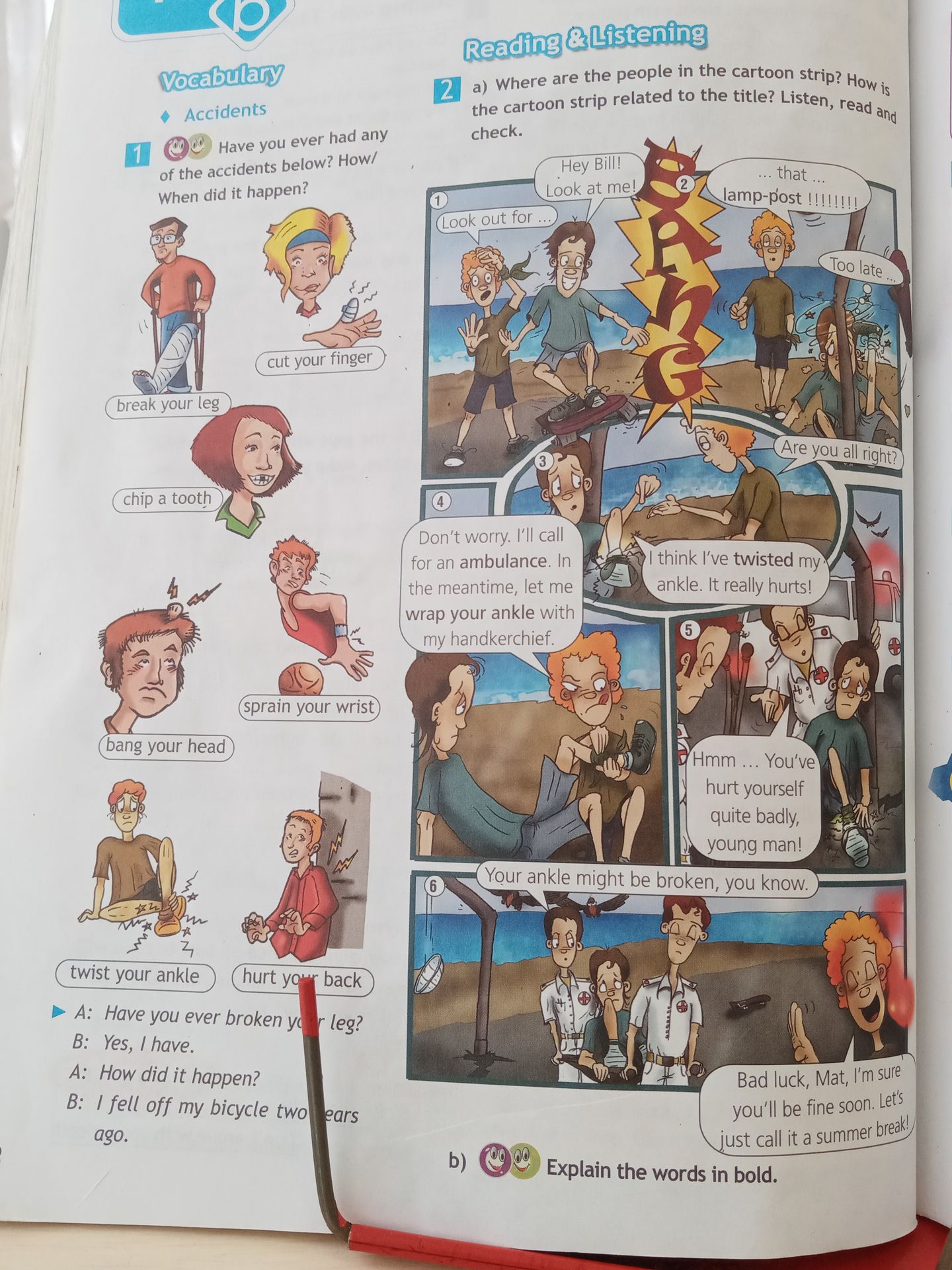
Explanation of Bold Words
To explain the words in bold, please specify which words are in bold in the original image. Based on the OCR, the words that might be considered 'bold' in the context of the exercise are the accident descriptions and the dialog. Assuming the exercise refers to the accident vocabulary and potentially key phrases from the dialog:
Vocabulary (Accidents):
- break your leg: To fracture a bone in your leg.
- cut your finger: To injure your finger with a sharp object, causing a wound.
- chip a tooth: To break off a small piece of a tooth.
- bang your head: To hit your head forcefully against something.
- sprain your wrist: To damage the ligaments in your wrist by twisting it suddenly.
- twist your ankle: To injure the ligaments in your ankle by turning it awkwardly.
- hurt your back: To injure the muscles or bones in your back.
Key Phrases from Dialog:
- "Look out for ...": A warning to pay attention to avoid danger.
- "Too late ...": Indicates that an event has already happened and cannot be prevented.
- "Are you all right?": A question to check if someone is unharmed after an incident.
- "ambulance": A vehicle equipped to transport sick or injured people.
- "handkerchief": A small piece of cloth used for wiping one's nose or tears, or in this case, to bandage a wound.
- "twisted my ankle": An injury where the ankle ligaments are stretched or torn.
- "It really hurts!": An expression indicating significant pain.
- "hurt yourself quite badly": To sustain a serious injury.
- "Your ankle might be broken, you know.": A statement suggesting the possibility of a fractured ankle.
- "Bad luck": An expression of sympathy for someone's misfortune.
- "summer break": A vacation period during the summer.
