
Вопрос:

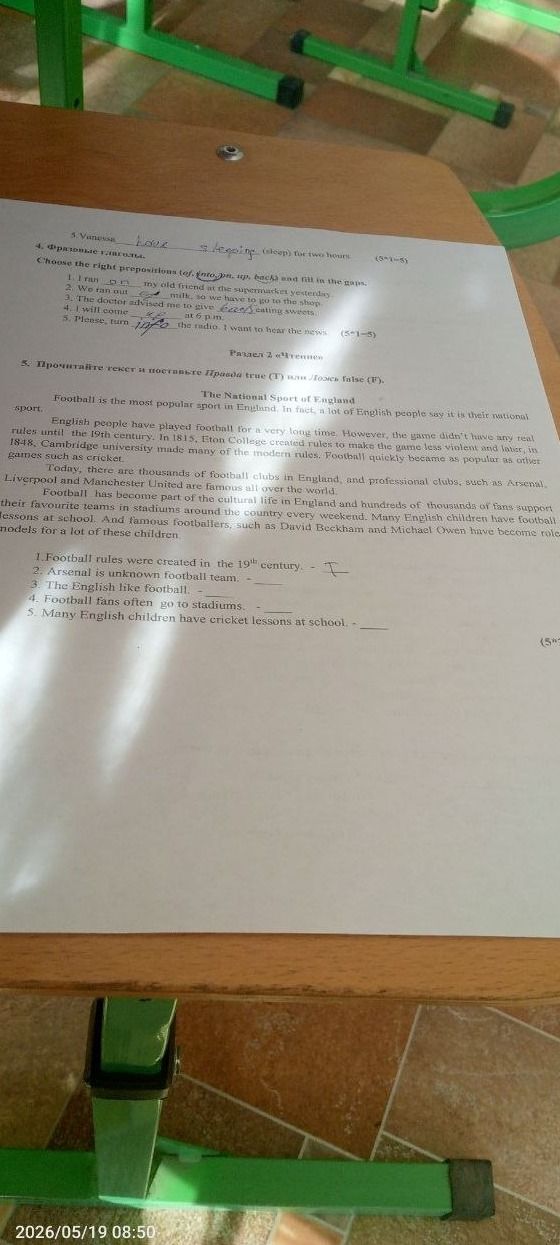
5. Прочитайте текст и поставьте Правда true (Т) или Ложь false (F). The National Sport of England Football is the most popular sport in England. In fact, a lot of English people say it is their national sport. English people have played football for a very long time. However, the game didn't have any real rules until the 19th century. In 1815, Eton College created rules to make the game less violent and later, in 1848, Cambridge university made many of the modern rules. Football quickly became as popular as other games such as cricket. Today, there are thousands of football clubs in England, and professional clubs, such as Arsenal, Liverpool and Manchester United are famous all over the world. Football has become part of the cultural life in England and hundreds of thousands of fans support their favourite teams in stadiums around the country every weekend. Many English children have football lessons at school. And famous footballers, such as David Beckham and Michael Owen have become role models for a lot of these children. 1. Football rules were created in the 19th century. 2. Arsenal is unknown football team. 3. The English like football. 4. Football fans often go to stadiums. 5. Many English children have cricket lessons at school.

Ответ:

Решение:

  1. Football rules were created in the 19th century. T (The text states: "However, the game didn't have any real rules until the 19th century.")
  2. Arsenal is unknown football team. F (The text states: "...professional clubs, such as Arsenal, Liverpool and Manchester United are famous all over the world.")
  3. The English like football. T (The text states: "In fact, a lot of English people say it is their national sport.")
  4. Football fans often go to stadiums. T (The text states: "...hundreds of thousands of fans support their favourite teams in stadiums around the country every weekend.")
  5. Many English children have cricket lessons at school. F (The text states: "Many English children have football lessons at school.")

Ответ: 1. T 2. F 3. T 4. T 5. F