
 Алгебра
 Английский
 Биология
 География
 Геометрия
 История
 Русский
 Обществознание
 Физика
 Химия
Химия Информатика
 Литература
 Математика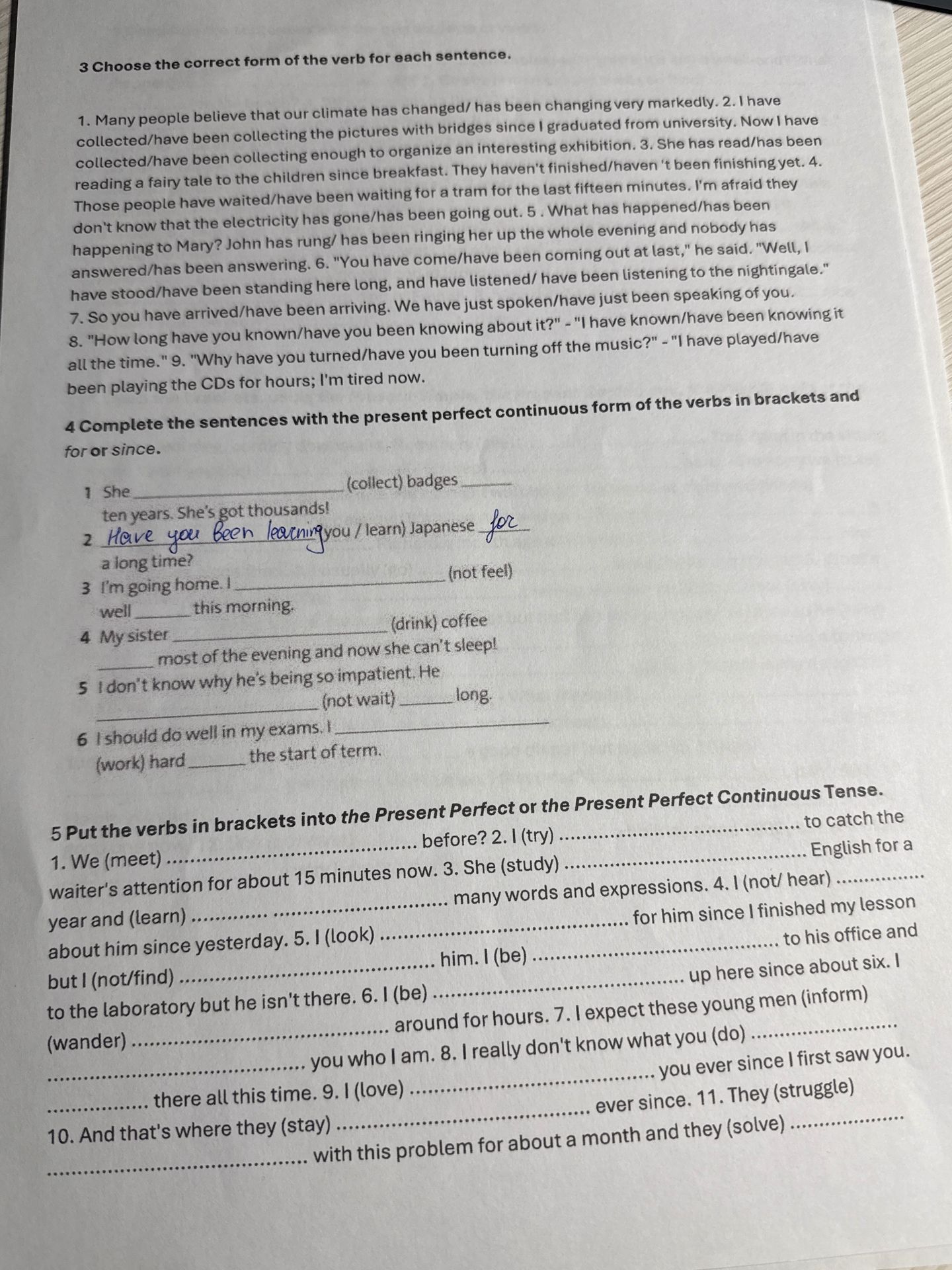
Ответ:
- Many people believe that our climate has been changing very markedly.
- I have been collecting the pictures with bridges since I graduated from university. Now I have collected enough to organize an interesting exhibition.
- She has been reading a fairy tale to the children since breakfast. They haven't finished yet.
- Those people have been waiting for a tram for the last fifteen minutes. I'm afraid they don't know that the electricity has gone out.
- What has happened to Mary? John has been ringing her up the whole evening and nobody has answered.
- “You have come out at last,” he said. “Well, I have been standing here long, and have been listening to the nightingale.”
- So you have arrived. We have just been speaking of you.
- “How long have you known about it?” — “I have known it all the time.”
- “Why have you turned off the music?” — “I have been playing the CDs for hours; I'm tired now.”
The present perfect continuous emphasizes an ongoing or recently continuous activity; the present perfect emphasizes a completed action, result, state, or event.
