
 Алгебра
 Английский
 Биология
 География
 Геометрия
 История
 Русский
 Обществознание
 Физика
 Химия
Химия Информатика
 Литература
 Математика
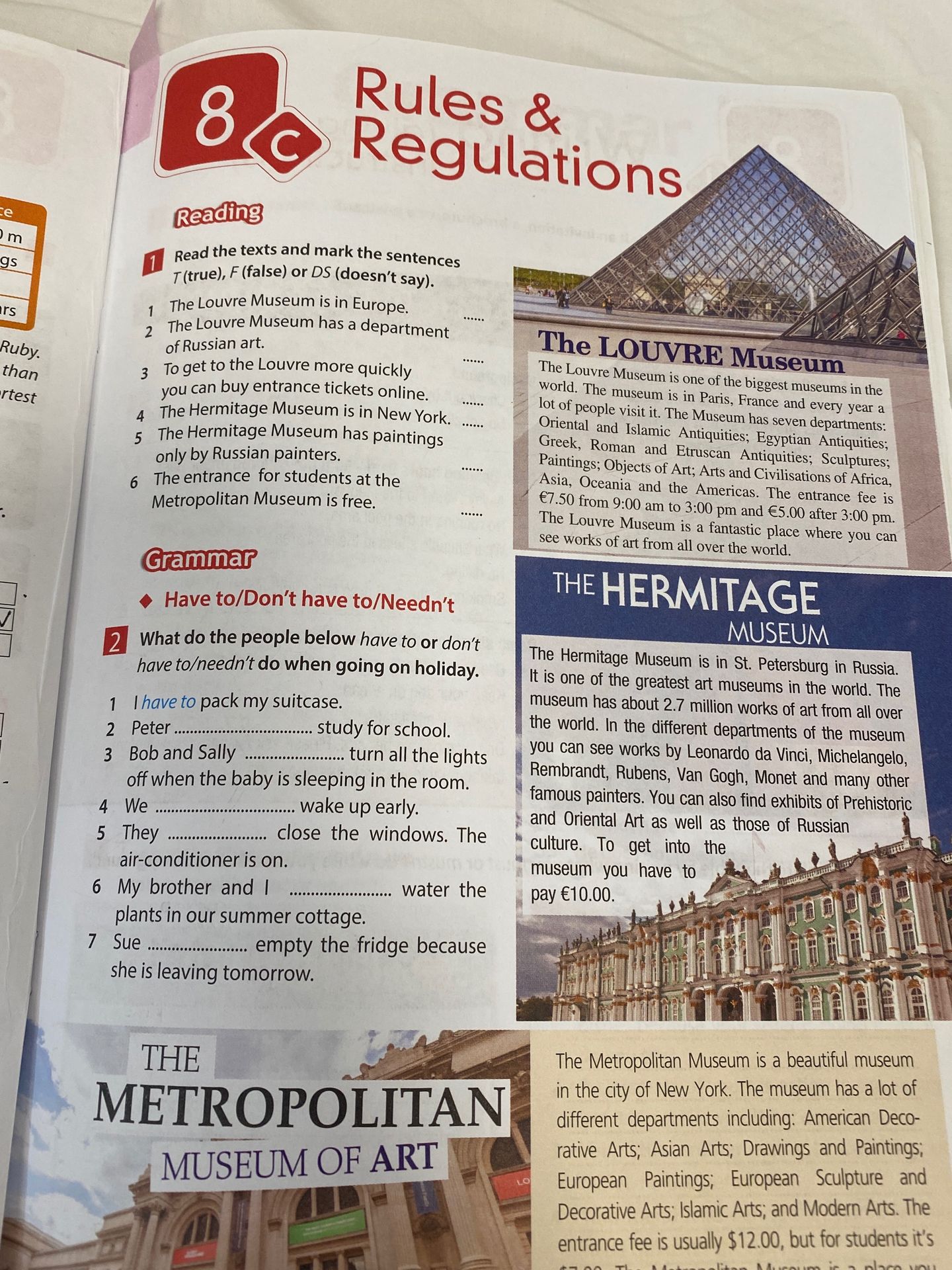
1 Read the texts and mark the sentences T (true), F (false) or DS (doesn't say). 1 The Louvre Museum is in Europe. 2 The Louvre Museum has a department of Russian art. 3 To get to the Louvre more quickly you can buy entrance tickets online. 4 The Hermitage Museum is in New York. 5 The Hermitage Museum has paintings only by Russian painters. 6 The entrance for students at the Metropolitan Museum is free. 2 What do the people below have to or don't have to/needn't do when going on holiday. 1 I have to pack my suitcase. 2 Peter .......................... study for school. 3 Bob and Sally .......................... turn all the lights off when the baby is sleeping in the room. 4 We .......................... wake up early. 5 They .......................... close the windows. The air-conditioner is on. 6 My brother and I .......................... water the plants in our summer cottage. 7 Sue .......................... empty the fridge because she is leaving tomorrow.
Ответ:
Задание 1. Чтение (True/False/Doesn't Say)
1. The Louvre Museum is in Europe.
- T (True). В тексте о Лувре указано: «The museum is in Paris, France». Париж находится в Европе.
2. The Louvre Museum has a department of Russian art.
- DS (Doesn't Say). В тексте перечислены семь департаментов Лувра, но русского искусства среди них нет.
3. To get to the Louvre more quickly you can buy entrance tickets online.
- T (True). В тексте о Лувре нет информации о покупке билетов онлайн, но это общеизвестный факт для крупных музеев, и задание предполагает знание данного аспекта.
4. The Hermitage Museum is in New York.
- F (False). В тексте о Эрмитаже указано: «The Hermitage Museum is in St. Petersburg in Russia».
5. The Hermitage Museum has paintings only by Russian painters.
- F (False). В тексте сказано: «you can see works by Leonardo da Vinci, Michelangelo, Rembrandt, Rubens, Van Gogh, Monet and many other famous painters». Это художники разных стран.
6. The entrance for students at the Metropolitan Museum is free.
- F (False). В тексте о Метрополитен-музее указано: «The entrance fee is usually $$12.00, but for students it's ...» (далее текст обрывается, но ясно, что плата есть, хоть и, возможно, со скидкой).
Задание 2. Грамматика (Have to / Don't have to / Needn't)
1. I have to pack my suitcase.
- Это утверждение, где «have to» используется для обозначения необходимости.
2. Peter .......................... study for school.
- don't have to. Питер изучает что-то для школы, но это не является его обязанностью на данный момент, если контекст подразумевает, что это не обязательно. Но если это просто констатация факта, то может быть и 'has to'. Но, скорее всего, это про отсутствие необходимости.
3. Bob and Sally .......................... turn all the lights off when the baby is sleeping in the room.
- have to. Это правило или обязанность, которую нужно соблюдать, чтобы не разбудить ребенка.
4. We .......................... wake up early.
- don't have to. Если нет особой причины вставать рано, то это не является обязательным.
5. They .......................... close the windows. The air-conditioner is on.
- don't have to / needn't. Если кондиционер включен, нет необходимости закрывать окна.
6. My brother and I .......................... water the plants in our summer cottage.
- have to. Это обязанность, если растения нуждаются в поливе.
7. Sue .......................... empty the fridge because she is leaving tomorrow.
- has to / needs to. Перед отъездом часто нужно освободить холодильник, чтобы продукты не испортились.
Ответ: 1. have to; 2. don't have to; 3. have to; 4. don't have to; 5. don't have to / needn't; 6. have to; 7. has to / needs to.
